Infrastructure and Activities.
The primary objective of this document is to obtain and disseminate a comprehensive understanding of the challenges and opportunities of the SWM system (infrastructure and activities) within the Rohingya camp context in Bangladesh. This understanding will inform evidence-based solutions for sustainable development and humanitarian response initiatives.
Through:
- Direct observation, prototyping, and field testing.
- Stakeholder discussions involving the Rohingya community in the camp, humanitarian workers, and advisors.
- Consultations with project managers/heads of units focusing on Disaster Risk Reduction (DRR), self-reliance, and livelihood.
- Comprehensive analysis of annual reports on Water, Sanitation, and Hygiene (WASH) and Camp Coordination and Camp Management (CCCM), along with other published materials.
Background:
The waste in the Rohingya camps in Cox Bazaar poses serious risks to site management, hindering safe movement and increasing flood risk, as well as negatively impacting the environment, including host community farming fields, water bodies, and the ocean. It also affects the protection, human rights, and dignity of the people living in the camps and host communities.
- The Rohingya Crisis has resulted in a massive influx of refugees to Bangladesh, with an estimated population of 878,596 to 1,114,386 refugees in Cox’s Bazaar district, which has increased the population density and exacerbated poverty levels.
- The areas affected by the Rohingya crisis produce 0.2 to 0.25 kg of solid waste per person per day, which is lower than the Bangladesh national average of 0.45 kg per person per day.
- Ukhia and Teknaf, produce over 10,000 tonnes (22,000 cubic meters) of waste per month, with no functioning waste management system in place.
- The waste produced in the camps alone is equivalent to a football pitch fully covered in a three-meter-high pile of waste every month. Nearly half of this waste originates from the Kutupalong-Balukhali mega-camp alone.
- Cox’s Bazar’s waste management needs were already expected to be severely inadequate before the refugee crisis.
- Since the beginning, every year a big fund is being dedicated to drains and water bodies clearing projects in term of flood DRR, literally dealing with the symptoms of the problem.
- It is now evident that the Solid Waste Management (SWM) issue in the Rohingya camp exceeds the capacity of WASH-SWM teams or any individual sector.
Questions:
- What are the main challenges and opportunities for enhancing solid waste management practices in Cox’s Bazaar, Bangladesh’s Rohingya refugee camps?
- How can the segregation on source systems be successfully implemented and adopted by the Rohingya refugee community, which lack awareness and knowledge about the environmental impact of solid waste management?
- What motivates the Rohingya refugee community to become more engaged in solid waste management, and how can their interest be sustained over time?
- What strategies could be implemented to change the behavior of throwing waste into drainage systems?
The Challenges:
A common issue arises wherein the development of Solid Waste Management (SWM) systems, activities, tools, and infrastructure remains unaddressed during the initial stages of humanitarian responses.
in addition to the unique context of the camps and its extreme challenges such as :
- Extreme hilly environment making access and movement difficulties.
- High population density and lack of space for SWM facilities.
- heavy monsoon, floods and land sliding.
the SWM system in the camps is worsened by several gaps:
- extremely poor camp-level infrastructure, wrongly designed and build trash bins, out-dated carts.
- Small number of MRFs and poorly designed facilities.
- Absence of developed SWM system models in the host community, including proper waste disposal infrastructure.
Results :
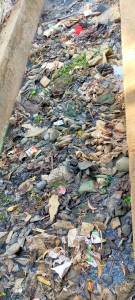
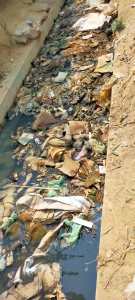
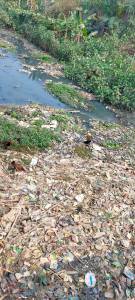
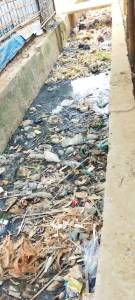
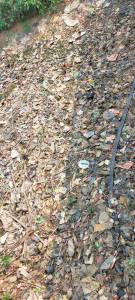
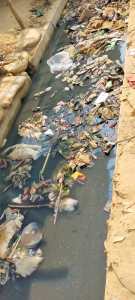
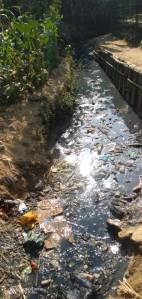
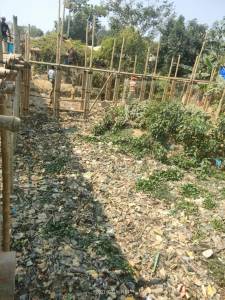
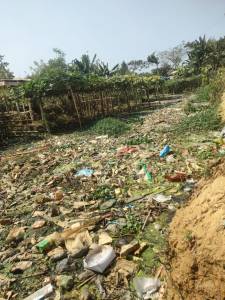
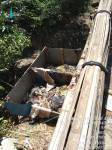
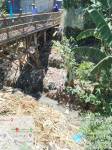
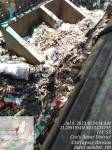
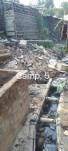
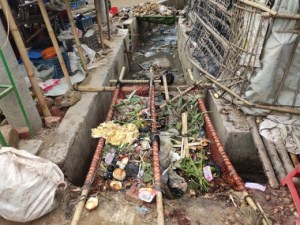
- Mixed waste accumulates within the camp environment, intertwining with water streams and drains, and even mingling with grey water. This accumulation necessitates significant and unpleasant cleaning efforts, extending over a vast area, and ultimately finds its way to lower-lying regions, including the farming fields of the host community, leading to contamination.
- As part of the response efforts, a substantial annual fund is allocated to undertake water stream clearing and drain cleaning campaigns. These seasonal initiatives aim to mitigate disaster risks by maintaining proper drainage systems.
- Despite the concerted efforts and SWM projects the situation continues to deteriorate each year.
- A comprehensive working plan and a holistic model that require a deep understanding have yet to be embraced by SWM partner teams and technical units.

Observations:
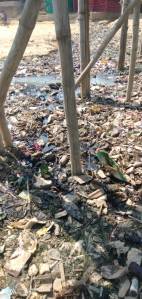
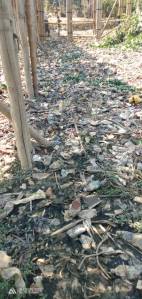
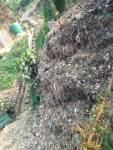
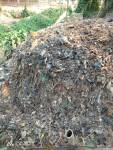
- In the camp environment, the waste predominantly consists of low-grade plastic, nonrecyclable materials, damaged tarpaulin, and textiles, often mixed with tree leaves and organics waste.
- In regions with scarce sand and soil, informal mixed waste dumping is a prevalent method to raise land levels in low-lying areas. Additionally, within settings constrained by space and mobility challenges, practices of waste disposal near water streams have evolved. Astonishingly, these practices have become routine, with even humanitarian workers mistakenly considering waste disposal in water streams and drains as a means of maintaining cleanliness in the vicinity.
- community members, including volunteers, exhibit increased engagement when they witness efforts to simplify and enhance the cleaning process. They actively desire a clean and hygienic environment. Their enthusiasm as partners soars when they perceive that the end results directly contribute to their well-being and are integrated into their surroundings.




Key Recommendations:
- Avoidance of waste generation and prioritize waste reduction and prevention measures by identifying potential waste sources and implementing measures to reduce waste at the source.
- Source segregation of waste, encourage proper separation as close as possible to the source, and in every stop of the waste travel.
- Increasing the capacity of the current infrastructure of the SWM system at the camp level.
- Community engagement in developing their own SWM system, including designing, fabricating, installing testing and correcting.
- Adopt a circular economy approach projects, in waste recovery, reuse, and recycling initiatives.
- Implementation of a comprehensive waste management plan, including regular monitoring and evaluation.
- Capacity building and training for labours, technicians, waste pickers, and SWM humanitarian staff.
- Strengthening the coordination and collaboration among key stakeholders such as UN agencies, NGOs, from different sectors and local government.
the proposed correction. Enhancing the Segregation at Source-Based SWM System.
The segregation at source-based system represents the pinnacle of sustainable Solid Waste Management (SWM). Currently, waste collection by WASH-SWM partners involves two sources: household waste collected directly from households and waste disposed of in trash bins. While both methods are essential, field reports indicate that trash bins often remain empty, while surrounding areas are littered with waste. This highlights the urgent need for:
- widning current system’s framework, enhancing its capacity to address all formal and informal dumping points, including drains, water streams, streets, and markets, and consider them as sources of waste.
- Conducting comprehensive camp-level infrastructure development and upgrading.
- Designing and implementing an inter-sectoral collaborative site and drain cleaning campaign to ensure a clean slate for the new phase of the SWM system.
1- widning current system’s framework, enhancing the capacity.
Social and System Design Narrative:
- After six years, routine site and drain cleaning campaigns before the monsoon have become standard practice, yet relying solely on this model widens the gap between actual SWM capacity and requirements, heightening the risk of neglecting the urgency to develop SWM capacity.
- Moreover, as cleaning campaigns coincide with the monsoon season and waste dumping in water streams is common, some individuals exploit natural water flow to reduce waste collection efforts from fields or drains.
- The community’s role in SWM system development is pivotal, impacting sustainability. Involving women, men, and children in site and drain cleaning campaigns, as well as in the development, production, and maintenance of SWM infrastructure, fosters trust in promoted models. Limiting community involvement to cleaning campaigns may reinforce misconceptions about waste disposal as an future employment opportunity. While SWM work is often considered low status, increasing daily wages for SWM workers may improve performance and competence. Stopping ineffective workers could enhance performance quality.
- Considering the dumping points as ideal trash bin locations, where waste segregation occurs upon arrival, can optimize waste management. According to the size of the dumping point, assigning volunteers to simultaneously clean and segregate waste at dumping points, and educating community members to segregate waste before disposal.
– Markets waste controlling-
Markets account for 50 to 60% of camp waste, making up a significant portion of the total waste. Primarily organic, waste composition varies with the seasons. Redirect waste to nearby composting units or for livestock feeding, especially from vegetable markets.
Strategically positioned customized trash bins near markets are vital. These bins should have sufficient capacity for two days’ worth of waste. Assigning two or three individuals to oversee waste segregation, and cleanliness, and guide shop owners in proper disposal practices is crucial. Their duties include preventing littering, educating on waste disposal, and ensuring bin maintenance.
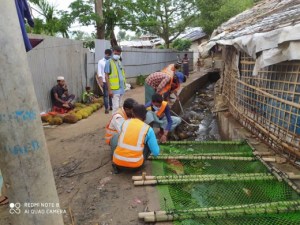
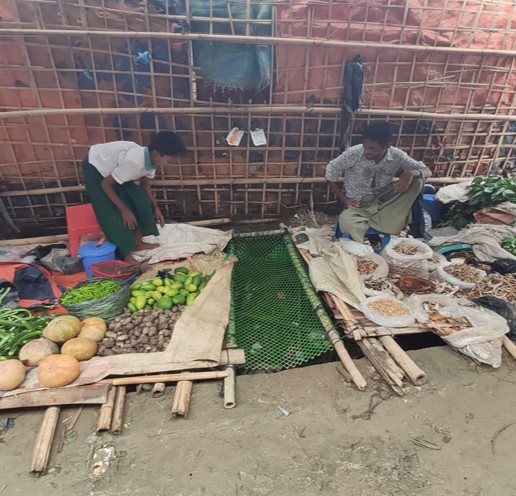
Baskets in the pictures were inserted between the shops in a market on top of a big drain. They were well-received and complimented by both the users and the community for six months.
– Informal Dumping Points –
Site development teams must regularly inspect the camp for informal dumping sites, especially those near water streams. These areas should be repurposed into efficient community trash bins or Micro MRFs, discouraging littering and promoting proper waste disposal for overall camp cleanliness and hygiene.
– Required Human Resources for Segregation at Source-Based System –
To establish a systematic and sustainable system based on Segregation at the Source, increased human resource capacity is essential. Engaging more volunteers for new MRFs, micro MRFs, and community trash bin supervision is crucial.
Terms of Reference (TORs) for these new tasks include continuous community education on waste segregation, preventing waste disposal in the environment, and minimal cleaning to maintain a clean environment. Micro MRF operators are responsible for composting organic waste, preparing recyclable waste, and maintaining structures.
| Activities | Volunteers | Supervisors | notes |
| MRF | 18 to 20 per camp | 2 camp | segrigation and composting |
| new micro MRF | 15 to 18 | 1 per camp | monitoring the incoming waste to be already segregated by the delivery person. and segregate what not segregated |
| community trash bins suppervisors | 20 to 25 | 1 per camp | monitoring the incoming waste to be already segregated by the delivery person. and segregate what not segregated |
| waste collecting carts | 15 to 20 | 1 per camp |
2- Camp level infrastructure developing:
The camp level infrastructure was built in an emargency settings, with lack of whole system design, trash bins and carts are simply copied from outdated models that are opperational in other contexts, those models are not considering the context diffreance in size, capacity and nature. They are as well not user or community friendly.
They are mainly :
A- Community Trash Bins: Brick/Cement and Plastic bins.
B- Camp level waste transporting carts.
C- Upgrading and boosting the capacity of the MRF.
-A-
Community Trash Bins: Brick/Cement and Plastic bins.
The existing non-developed community trash bins have led the whole system in a wrong direction for five years. There are more than 600 trash bins in the mega-camp need to be modified, adjusted, developed.
The community trash bin is the first infrastructure that the community will encounter.
While the brick and cement walls of trash bins are very common in non-developed community SWM systems. They create an unpleasant job that no one wants to do, no one wish the bins to be filled with waste, and no one wants to get inside to empty and clean them.
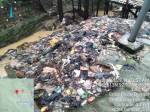
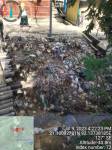
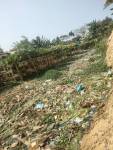
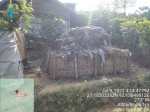
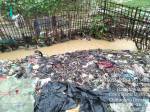
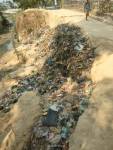
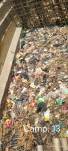
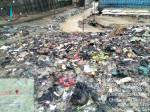
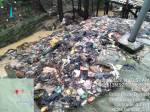
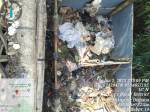
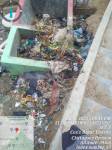
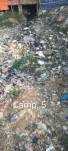
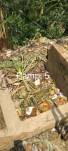
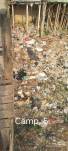
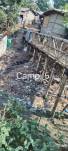
In the next gallery pictures were collected by Rohingya volunteers in January 2023, showing the empty trash bins in camps 1-2-3-4-5-6-7-8W-9 and some informal dumping points around the area, including some drains and water streams saturated with trash.

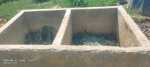
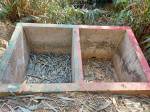

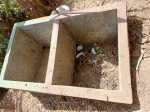
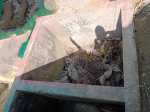

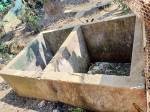
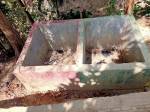
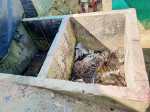

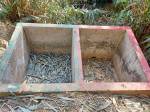
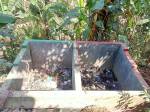
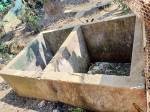
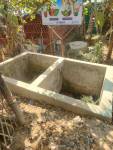
Difficult to clean using shovels, it will stink when it is full. No access workers must step on the trash to clean. it is unpleasant job especially with rain. No one want to live next to it.

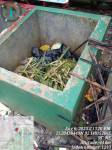
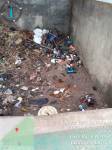
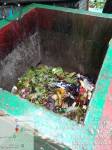
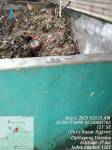
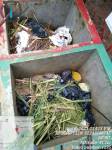
The plastic 100 to 150 liter waste bin with wheels that agencies distributed is too heavy, too difficult to move in the camps pathways and streets especially when it is full, it is very often broken and not possible to fix in the camps’ context.

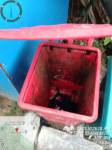


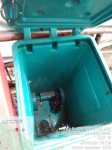
Due to the rough and hilly paths, the plastic trash bins are being fast damaged. They are very heavy when full. Costly and designed for different context.
-The proposed correction: community-made baskets-
The community volunteers are skiled in making nets, when the gaps are 5*5 cm, individual can make 2 sqm in avarage per day. those baskets will eleminate the need to shovles work , when they are installed in the right point it
Next pictures show examples of the simplest correction, many of which were applied during the fire response in camp 9, either correcting the trash bins or the drains structures next to markets.
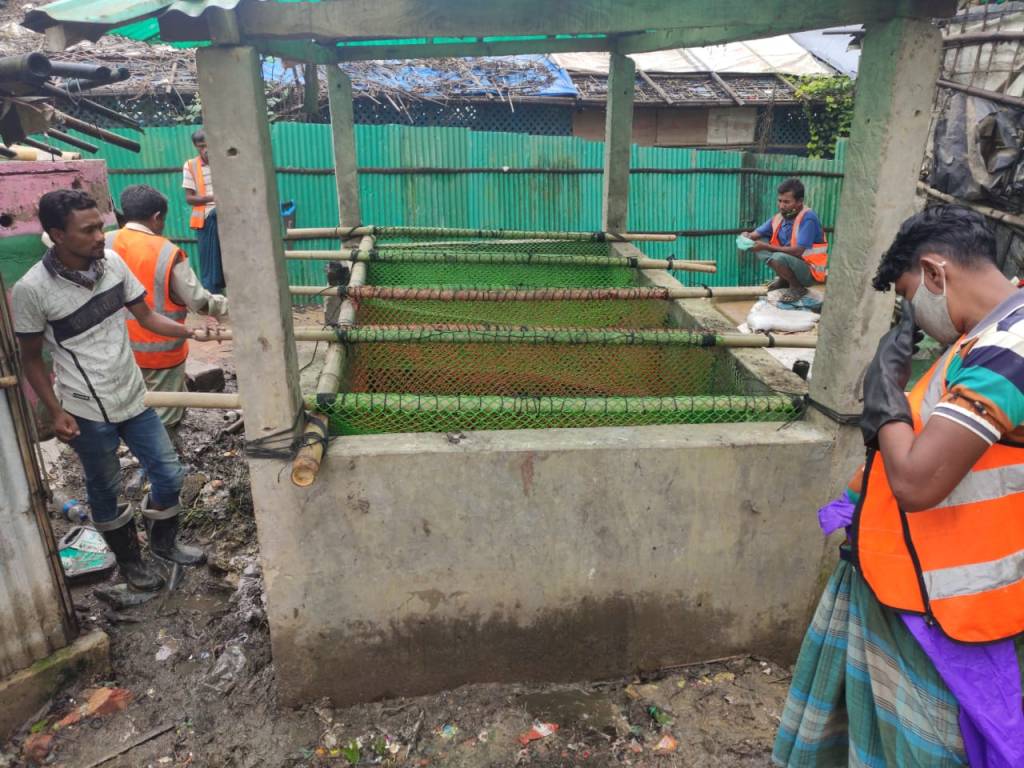
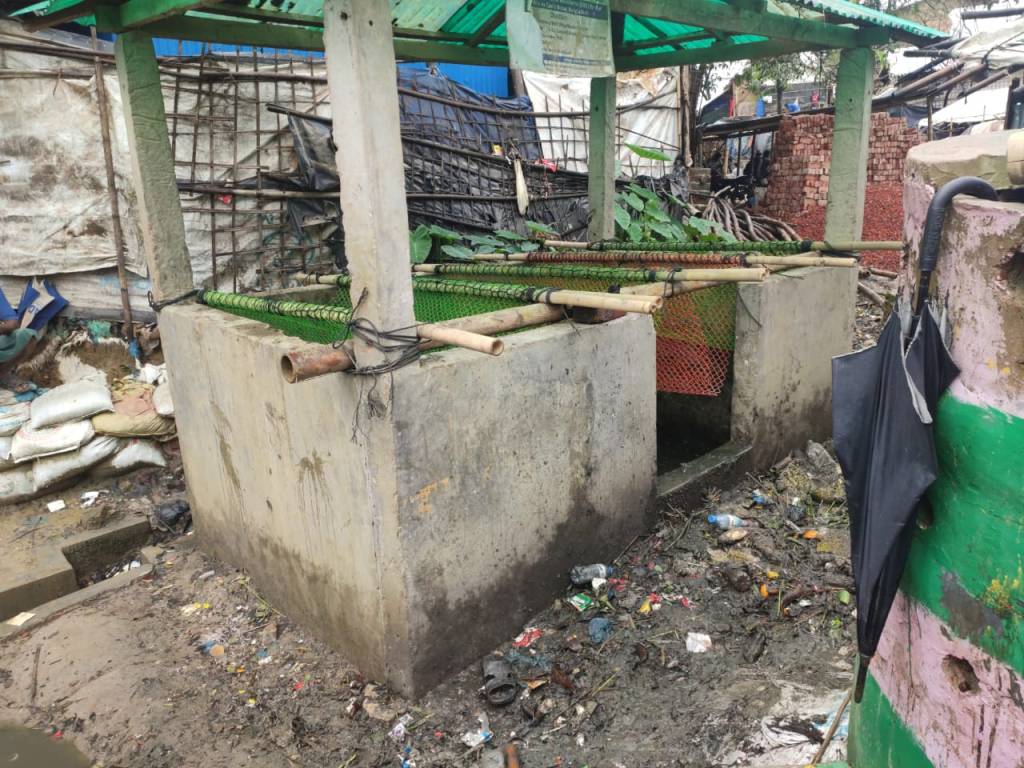
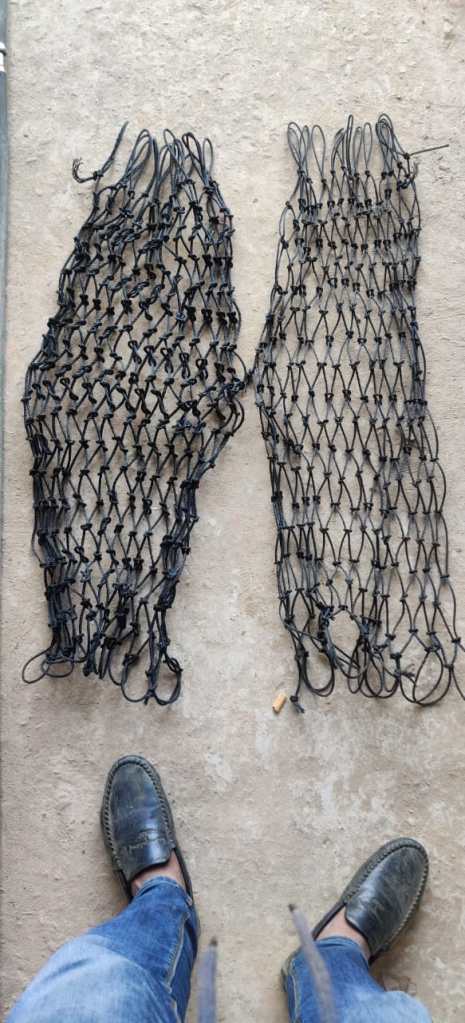
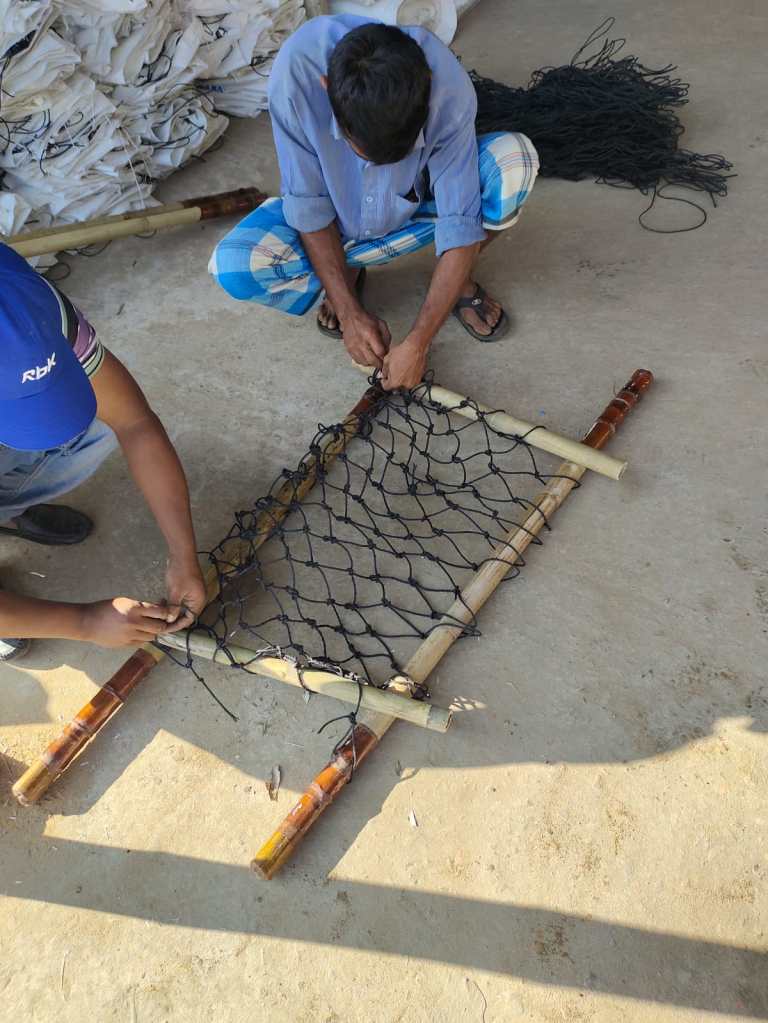
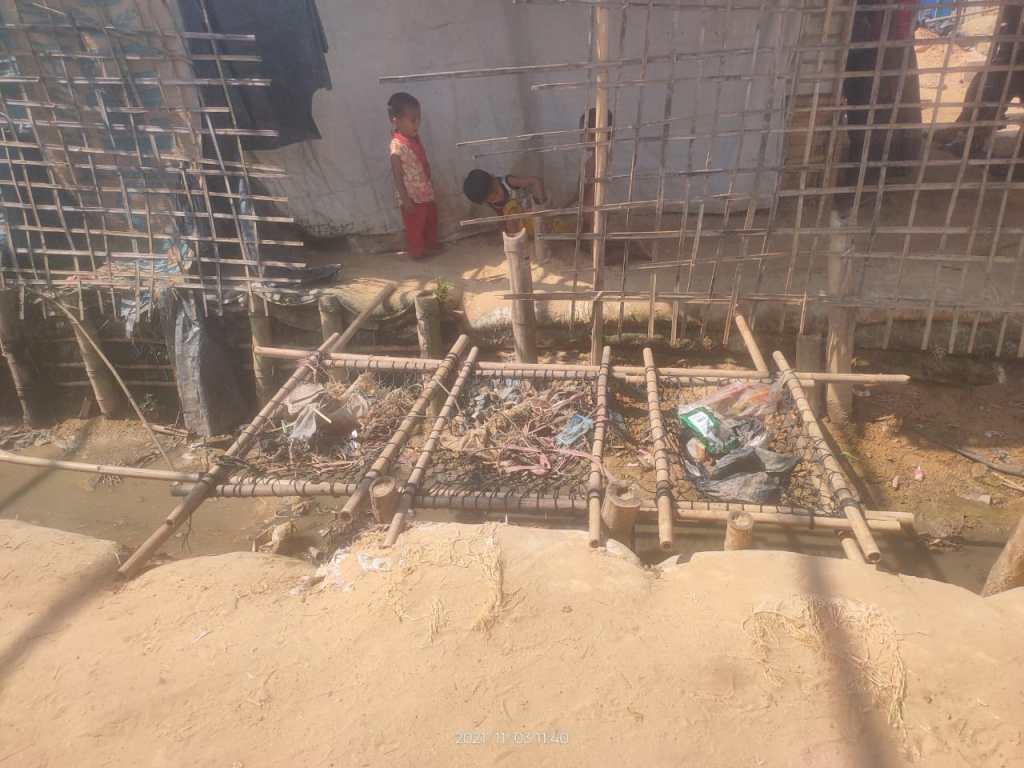
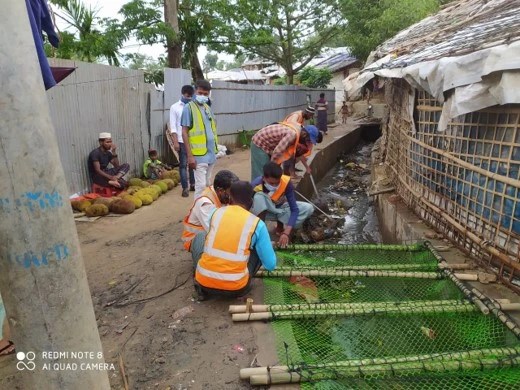
similar and not limited in the pictures, modifying and developing, the existing trash bins, for easier and decent removal of the waste. community made baskets, community man and women netting craft, and small bamboo reinforced handles.
The approach is to use community-made, costumed, simple, lightweight, flexible, synchronized with the system, and easy-to-repair carts and baskets.
-B-
Camp level waste transporting carts.
The currently used in the camps, the modified rickshaw bicycle carts made of steel, or the construction tradetional pushing carts are very commonly used in Bangladesh, they are suitable for horizontal landscape, flet roads and very unsuitable for the hilly environment such the on in the camps.
they have heavy structure, difficult to push and pull, and cannot go through small passages, markets, or bridges. They are also expensive, inefficient, and difficult to repair in the camp’s context.

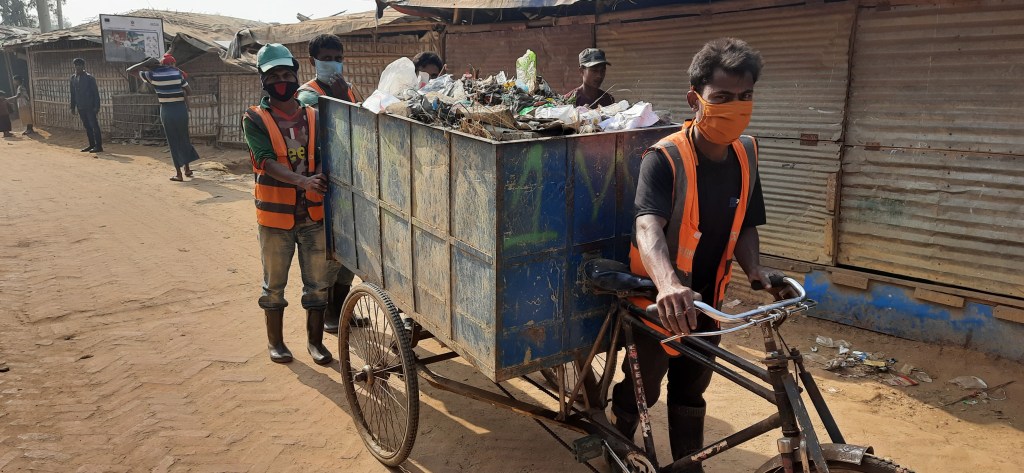
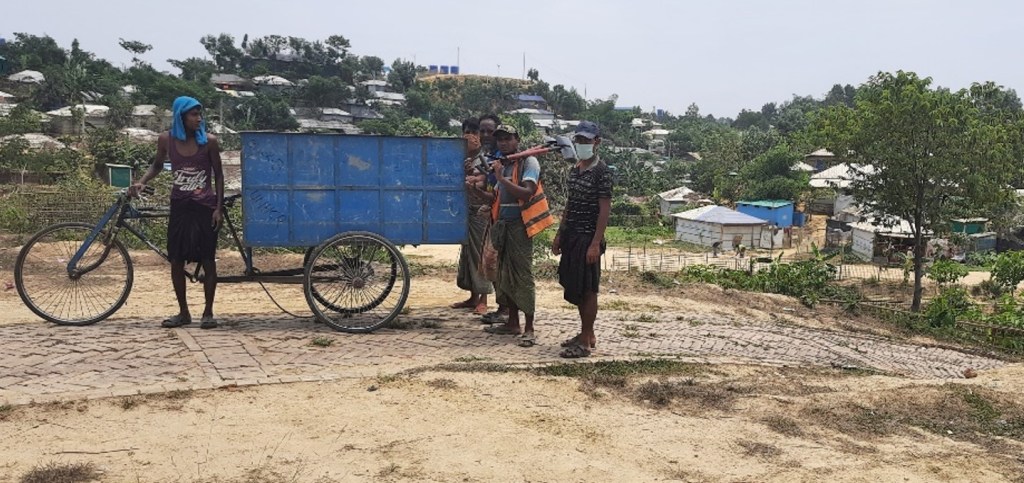
-The proposed correction is flexiable, easy to load and offload carts-
The community volunteers need user friendly, light, slim, easily to replace/ clean, loud and off loud. simple easy to make and maintain.
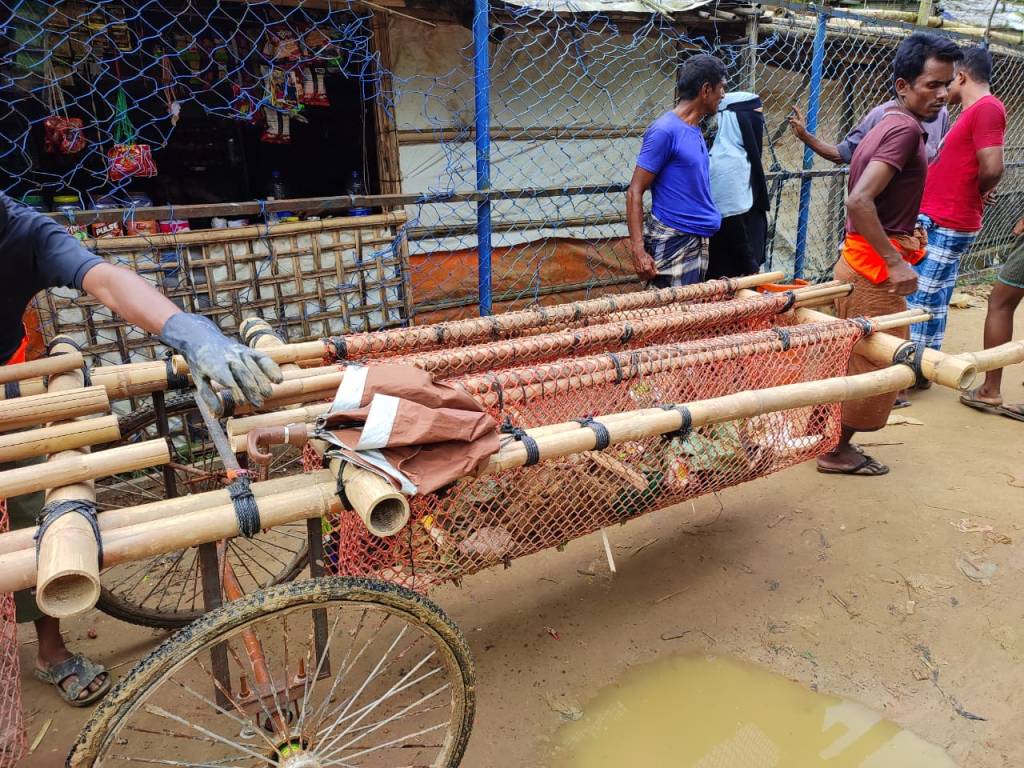
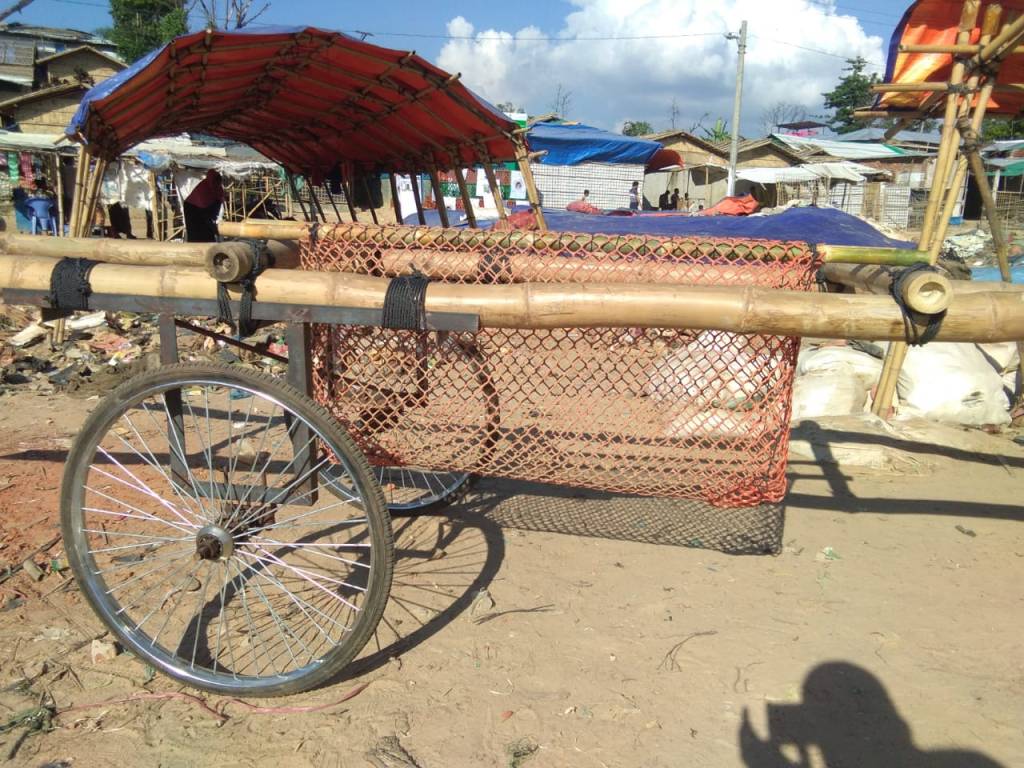
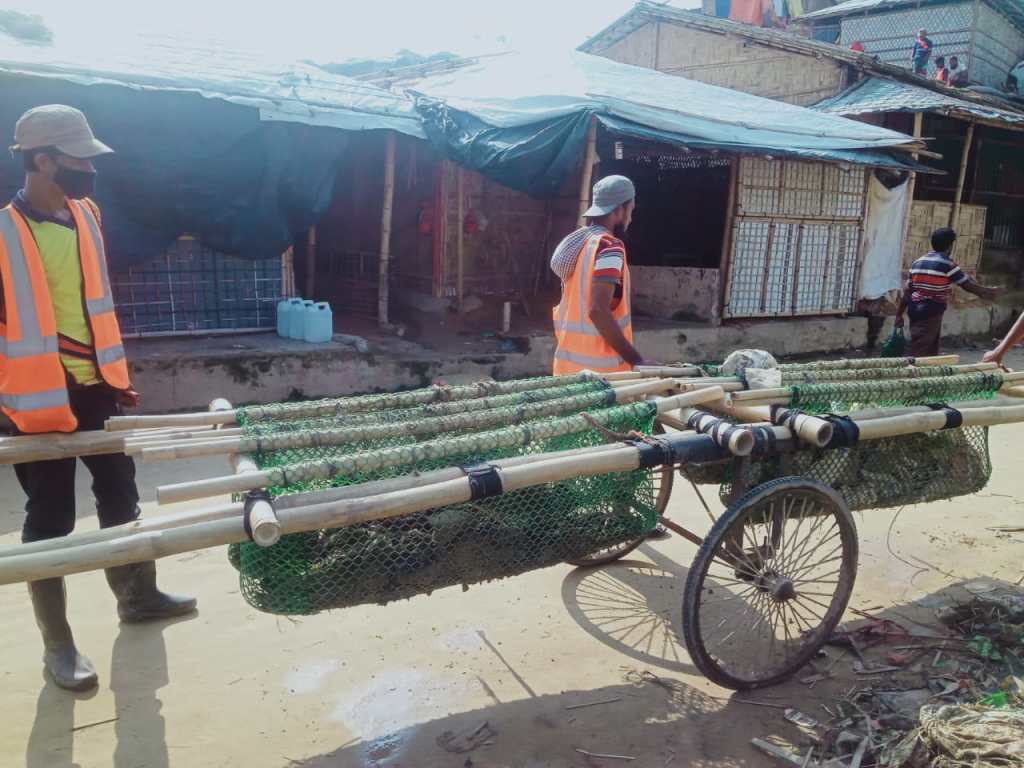
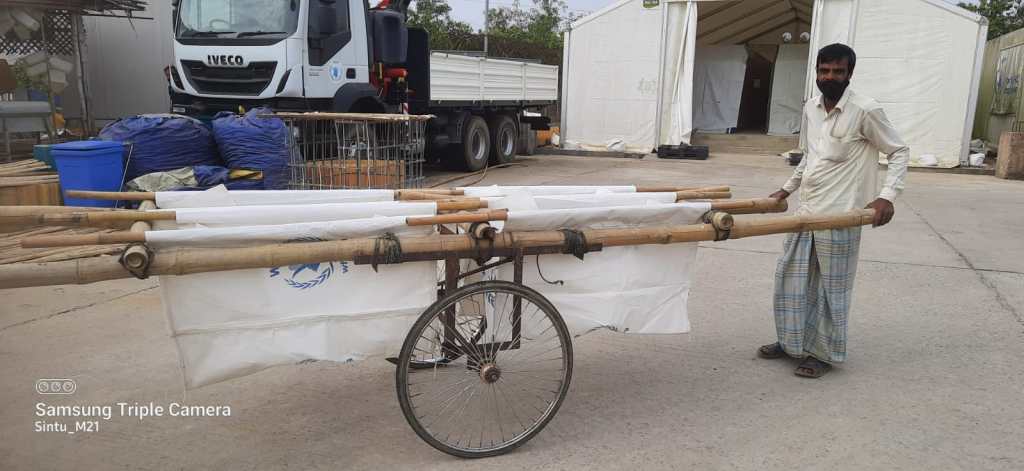
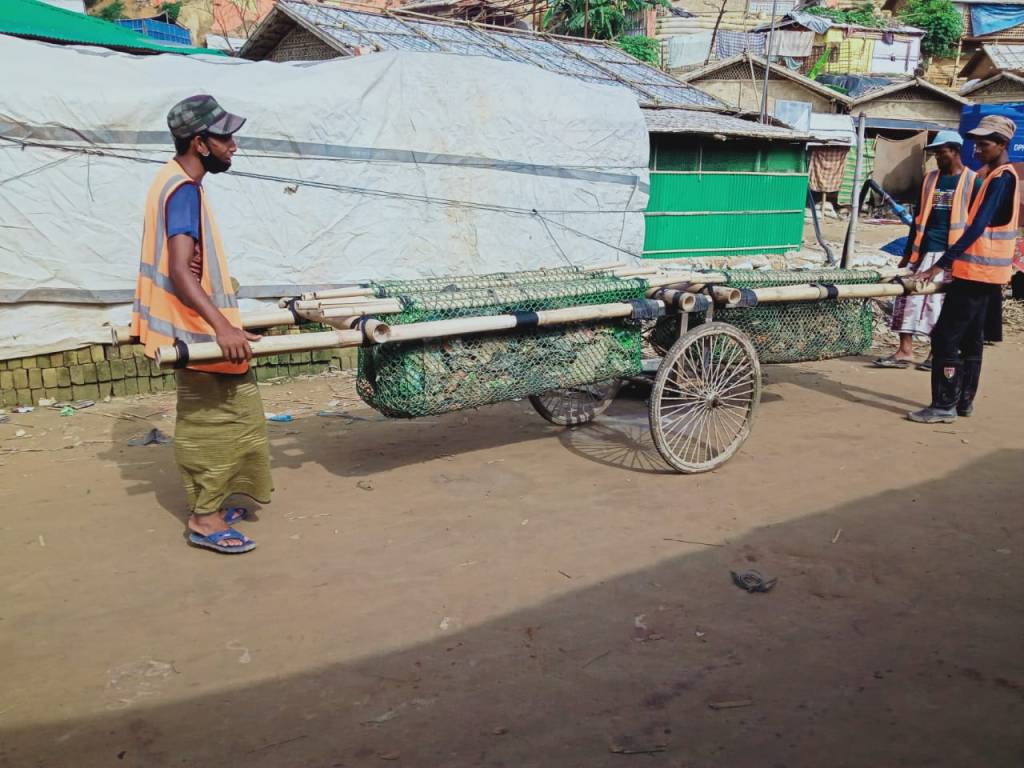
These carts are flexible and can contain, in separate baskets, organic and recyclable waste. Can also be synchronized in size with the proposed community trash bin design for easy and fast charge and decharge. In areas with narrower pathways, the carts can be designed to be slimmer and shorter.
-C-
Upgrading and boosting the capacity of the MRFs.
Basically, in any developed SWM system, segregation conveyors are the core of the segregation facilities, as they have a great impact on the segregation processes. Providing basic and customized waste conveyors to the MRF can increase the capacity and quality of the process, save resources, and ease the segregation process. However, MRFs in the camps often struggle with lack of space, labor, and underdeveloped processes.
The currant number must be trebled, temporary structures, located as close as possible to the waste source, preferable within 100 meter distance from markets, dumping points. It is recommended to have 5 to 6 MRF for each camp.
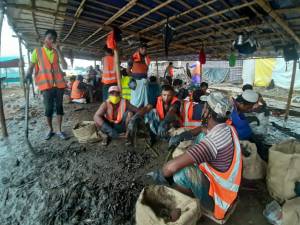
Controlling the informal or temporary dumping point, by converting to MMRF, ” Micro-Materials Recovery Facility.
-Proposed MRF development-
The current activities in the MRF are segregation, organic waste composting, small temporary storing of recyclable objects.
in this challanging phase It is highly recommended to assign more temporary MRF and composting units in the camps to increase the capacity of the SWM system. in this challanging 4 to 5 MRF for each camp is a sufficiant number. Providing more space and waste segregation conveyors will further improve the capacity of the segrigation process.
- Assign additional MRF considering the scarce of spaces. tranforming the big informal or temporary dumping points to a micro MRF.
- building and developing a budget friendly, a replicable, a temporary use and customized segregation conveyor belts, Pedal or battery operated mechanics, using alternative materials ( wood , bamboo, steel, plastic mesh). One conveyor per camp as a first step, it is recommended to have one unit in every MRF.
Required Human Resources and time for Camp-Level Infrastructure Development.
| Activities | Actors | Volunteers | Time in weeks |
| In the vegetable markets, Building structures and Installing baskets. | CCCM + WASH | 6 to 8 per C | 4 |
| Baskets fabricating and handing over to DRR WASH and SDSM partner in the camp. | DRR self-reliance, livelihood | 40 to 50 in total | 4+2 |
| Tools fabricating and distributing. | DRR self-reliance, livelihood | 10 to 12 in total | 4 |
| Carts fabricating and distribution accordingly. | Outsourcing | 6+2 | |
| Portable segregating conveyors building. | 10 to 15 technicians in total | 8+2 | |
| Secondary segregation shades installing. Micro MRF. | CCCM | 8 per C | 4 |
3- Inter sectore collaborative, site and drains cleaning campaign.
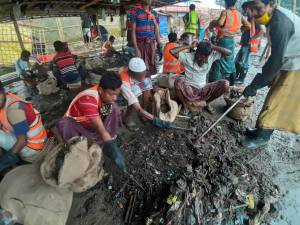
The Community-Led Inter-Sectoral Collaborative Site and Drain Cleaning Campaign is a pivotal transition phase within the SWM correction. This campaign shares the same name and objectives as the regular annual drain cleaning activity, yet it extends its scope beyond water channels to encompass all areas of the campsite. It represents a critical juncture following the establishment of new infrastructure and the fabrication of essential tools. This campaign serves multifaceted purposes, including:
- Testing New Infrastructure: This initiative provides an invaluable opportunity to operate and test the newly implemented tools and infrastructure at maximum capacity, ensuring their efficacy and identifying areas for further refinement.
- Engaging the Community: the aim to reset the environment, providing a fresh start for the implementation of the at source segrigatin based SWM system. This engagement fosters ownership and encourages active participation in waste management initiatives.
- Ensuring Comprehensive Site Cleanliness: The campaign is not limited to water channels but extends to all areas of the campsite, including shelters, streets, markets, and public spaces. This will ensur that the entire site is pristine and free from waste accumulation and gain more spaces to the benefit of SWM projects.
Key Recommendations:
- Engage all humanitarian actors according to their areas of expertise, increasing the number of volunteers, tools, and supervisors during the initial months .
- Utilize announcement and communication campaigns within the community to garner support and participation.
- Assign responsibilities to laborers, including preventing littering, directing individuals to designated trash bins, and communicating with community members to promote proper waste disposal practices.
- Maintain cleanliness in drains and water streams to reduce the risk of flooding and ensure disaster risk reduction.
- Following the initial year, streamline the campaign to focus solely on cleaning drains and water streams one month before the rainy season, with a reduced labor force of no more than 20 workers per camp.
The Community-Led Inter-Sectoral Collaborative Site and Drain Cleaning Campaign is a crucial component of our SWM proposal, serving as a bridge between infrastructure establishment and full-scale implementation. By embracing this campaign, we lay the foundation for a sustainable and effective waste management system while fostering community engagement and ownership. Together, we can achieve a cleaner and healthier environment for all.
The basic required tools :
In addition to the new infrastructure, the new baskets, carts, segregation belts, the individual volunteers are in need of personal tools and equipment to insure safety and better comfort work conditions.
Brooms, sandbags, gloves, proper shoes for long distance walking, and hats are the minimum tools for any worker in this field. Big hats should be considered as essential equipment, and rubber boots may not be comfortable for long distances, but they are important when there is a need to go into contaminated water spots.
Additional tools such as forks and shovels will be needed for the first cleaning of the dumping points, drains, and water streams. The forks that are currently used by WASH partners are suitable, but in some cases, the handles could be extended using bamboo bars that are connected securely to the handles with rope.








Required Human Resources and time for site and drains cleaning campaign.
In average, a number of 60 to 70 extra volunteers in each camp for 12 to 15 weeks, is sufficient work force to conduct all the extra activities in cleaning the site.
Under supervising of 4 to 5 supervisors from the CCCM in each camp. In average, a number of 80 to 100 extra volunteers in each camp for 12 to 15 weeks, is sufficient work force to conduct all the extra activities in cleaning the site.
| Activities | Actors | Volunteers | Time in weeks |
| Culvert clearing and silt trap creating, De-silting. | CCCM | 15 per C | 6 |
| Big channels waste trap building. | CCCM | 10 per C | 4 |
| Cleaning drains. Sever cases and big drains first. | DRR | 10 per C | 6+6 |
| Big drains waste trap building. | CCCM DRR | 5 per C | 6 |
| Cleaning and developing the dumping points to community trash bins or micro MRF, and cleaning between the shelters. | CCCM WASH | 25 per C | 4 |
Site and drains cleaning campaign work plan
This work plan spanning four months, which integrates the DRR activities of drains and site cleaning with the overarching goal of upgrading the entire camp-level Solid Waste Management (SWM) system. The work plan is divided into two distinct phases: the preparation period and the implementation phase. the preparation period is basicaly the assessment visits, constructing, installing, and fabricating the new infrastructure, tools, equipment, and structures. In the subsequent implementation phase, covers executing cleaning, transporting, and segregation activities as outlined in the plan.
Eventual waste controlling “Construction waste an example”
The responsibility for managing waste typically falls on the implementer, who should be supervised by the SD field level teams, by conducting daily checks of the site to ensure that waste is being properly managed and disposed of.
Construction waste can include a variety of materials such as bamboo, sand, soil, brick, sand bags, rope, and tarpaulin. Materials like soil, cement, and brick that are used in the site can be managed on-site, but other materials such as tarpaulin, rope, bamboo fiber, or bamboo should be transported to the closest Material Recovery Facility (MRF) for proper disposal.
Land fill capacity
In addition to the existing solid waste management practices in the Rohingya camp, it is recommended to explore the possibility of identifying and designating more landfill locations. With the increasing population and waste generation, it is important to prepare new landfills in advance to prevent overloading the existing ones
Additionally, when proper use for disposed material is available, it may be worthwhile to consider the economic and environmental feasibility of mining the current full landfill sites, as it can potentially provide a source of materials for future infrastructure and development projects. Careful planning and management would be necessary to ensure that such activities do not result in further harm to the environment or health of the local population.
-Key Recommendations for Future Sustainability-
- Encourage SWM volunteers to consistently remind and request ask the community members for better collaboration and waste segregation.
- Encourage community members and site development teams to actively monitor and conduct regular inspections to identify informal dumping sites and address them promptly.
- Consider minimizing or discontinuing the micro daily passage cleaning paid job and instead involve shopkeepers and householders in maintaining cleanliness around their respective areas.
- Promote waste segregation at every stop, encouraging individuals to separate and recover their waste before disposal. Additionally, prioritize composting organic waste and use the compost as close to the source as possible.
- Establish a recovered materials library, also known as a waste bank, to facilitate the reuse and recycling of materials. Support livelihood initiatives aimed at producing products beneficial to CCCM and WASH projects.


 Sustainable Design In Humanitarian Action
Leave a reply to Saif M Rahat Rahman Cancel reply